What leaving a cult taught me about nervous systems
Wow, what a tagline, right? ;)
Also, probably some trigger warnings in here.
Once upon a time, a sweet, little, white-blonde-haired girl was born in West Jordan, Utah.
She was raised in a predominantly LDS Mormon neighborhood, but she had a secret.
A secret that wasn’t really a secret to anybody, to be real.
Unlike the other Mormon kids in said neighborhood, daddy had multiple wives.
Always feeling like she didn’t quite fit in amongst the LDS kids (I mean, she was repeatedly told by her church that she was better than everyone else simply by being baptized in her church), but also not living close to her friends associated with said church, she always felt like she had her two feet in two different worlds.
And she began to notice splits everywhere.
Some siblings left the church and became atheist, while some of us devoutly worshipped God.
The church taught us not to lie, but daddy lied about drinking his coffee.
Women weren’t supposed to lead but mommy sure wore the pants.
Heaven and Hell existed, but everyone had a different opinion about what got you there.
What was actually “bad” or not.
But the one thing that always stuck to my little nervous system, was that if I did choose the wrong thing—
I was in deep, deep trouble.
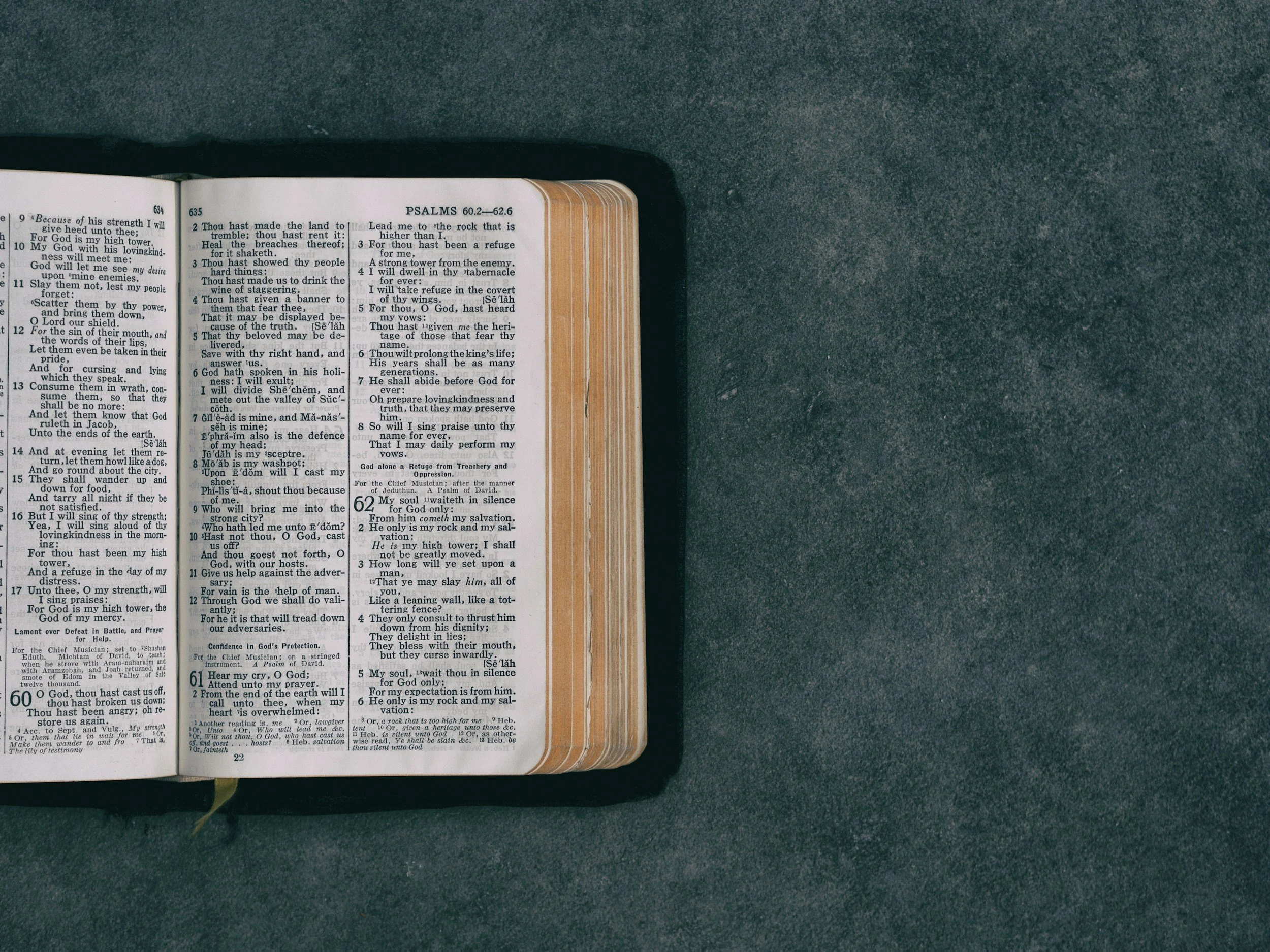
From the fear of disappointing my parents, to the everlasting damnation of disappointing God, or wasting Jesus’ sacrifice on the cross—
I was constantly on the search for what made me wrong, so I could become right.
I needed to become the Good Girl™️.
Fidgeting. Scanning. Anxious. But always with a smile on her face that made others adore and love her easily. Because you should always smile more, right?
Absolutely needing to do what others wanted her to do, so she could be deemed good in their eyes, only to disappoint someone else and constantly backtrack.
My knees should have been bruised with how much I was on them from praying and repenting growing up.
The anxiety would eat at my stomach, the fear of disappointing someone.
I noticed every detail and watched every nuance, absorbing my environment like a sponge.
I would scream on the bathroom floor in stomach pain and be in and out of the doctor’s office.
I remember countless nights sleeping on the couch with a bowl beside me from being so chronically sick.
As a teenager it shifted into migraines and an eating disorder.
Constantly overthinking the amount of gaslighting I received, trying to figure out what was truth from lie, but being constantly talked out of it if it didn’t support someone else’s vision of the truth.
And needing to be skinny and pretty because I needed to become a good wife and mother one day.
Over the years, I watched myself force laughter even if I felt no joy.
Becoming a shell of the person I was because my entire existence was simply trying to figure out how to not go to hell and lose my family.
(Spoiler alert: Hell doesn’t exist and I did lose my family.)

Now, don’t worry. I’m doing fine now.
Really well, actually. Because here’s what I learned:
HELL DOESN’T EXIST:
Now, if you’re Christian or religious of any sort, I’m not slamming you and your beliefs.
What I’m saying is, the majority of the things that are actually causing us pain, is the constant worry over them.
The anxiety, the over-thinking, the constant pressure we feel—it drains us. Feeds off of us.
And what I found in myself, was that instead of actually becoming the selfless, Christ-like person I was told I needed to become, I instead became fearful, people-please-y, desperate for validation, and a push-over.
It took me some time and exposure to realize that most people aren’t actually going to harm someone else just because they don’t have a set of commandments. Most people, inherently, are good.
What drives hurtful actions is almost always a desperate need to protect oneself, and in that we lose sight of the people around us.
In other words:
if we weren’t so blinded by fear, perhaps we could truly see.
Releasing myself from this deep form of people-pleasing (because for me that’s truly what it was, was pleasing-people for survival) has meant that I can allow the goodness of my heart to truly come from me. And since this has removed the immense pressure from my shoulders, it has also reduced anxiety, depression, mood swings, and allowed more room in my mind for possibilities than ever before.
Because truthfully, when it comes to nervous system regulation, it’s about allowing flow instead of forcing peace. More on this later.
loss is inevitable:
Living life in such a way that you never lose anything or anyone ever is the equivalent of trying to contain the ocean in your two hands.
You simply cannot contain that.
The ocean is pulled by the moon, something far bigger than us, and people are also pulled into different directions, by something far greater than yourself.
And speaking from experience, the more boxed in you try to make someone, the more they attempt to break out.
When we hear the spiritual experts talk about living life in flow, it’s simply learning to not try and control the outcome. Because we aren’t large enough to control all of the factors from all of the people, all of the time.
Releasing yourself from that creates a sense of peace I haven’t experienced otherwise.
So yes, I have lost people I deeply loved. Some out of choice and some not. And I don’t try and convince the latter otherwise.
By doing so, I’ve aligned myself with relationships that are far more supportive, and created understanding within myself that many of these might be for a time, not forever. This also creates a safety in being authentically myself, knowing that neither of us owe the other anything, which in the end is actually the thing that results in more freedom (which nobody truly needs to break free from, which ironically might keep them around longer).
Safe relationships where you can authentically co-regulate actually generates more nervous system regulation and can expand your window of tolerance.
Forcing “family is forever” kept me stranded in relationships in which hurt was caused from both sides.
I chose what felt better for myself and my nervous system, and in the end I do believe that was better for theirs, too.
Expansion is regulation:
Trying so hard to be “good” all the time, really put me into a box of what “good” meant. If I’m to know how to align myself with being a good person, I need to know what the rules are, right?
This on the surface might seem like an excellent strategy, but for myself it actually meant that I inherently believed I was wrong and bad, and that to be good I needed to follow a strict set of rules—the straight and narrow, if you will.
The sneaky thing here is, if I inherently believe I’m wrong somehow, all my actions will stem from a place of correcting that.
Correcting myself, and the language I would use inside my own head around this, inevitably bleeds out onto others. I still catch myself using judgmental language because someone else is doing something that I wouldn’t do, therefore believing even subconsciously that “they are wrong.”
How narrow-minded of me is that?
Instead of moving from a place of “I am less than the dust of the earth, God is everything, I’m at His mercy” I moved to “I fucking belong here. I am the dust, the earth, the sun, and the stars. We’re all made of the same stuff, just manifesting differently. All of us have our place, our part, and I owe no one anything.
How then, would I like to move?”
Again, I think people are inherently good. When people hurt others it’s almost always from pain they received that again, they perpetuate onto others.
I decided I didn’t want that to be my baseline. People hurt each other sometimes, but I wanted to build my foundation on speaking to myself with kindness and love. I wanted the energy I spilled onto others to be a mirror of the love I had for myself.
That means disappointing people. It means posting this blog that I’ve been sitting on for months because I understand it might offend many. It means trusting that my people are my people and that I don’t have to be liked by all. That my place, my experience, my words, will reach the ones that need it, and can be denied by the ones who don’t.
Wonderful.
When we finally realize that we never had to be anything, we can exist in everything.
And life becomes expansive.
Coming back to the “more on this later”—When it comes to nervous system regulation, the experts understand that it’s not about limiting your sense of expression. It’s not about never feeling anger, sadness, or grief, and only limiting yourself to happiness and joy.
It’s trusting that the body has a beautiful intelligence to it, and that this range of emotion creates more connection, availability, compassion, intelligence, and opportunity.
You don’t need to lose yourself in any of the emotions, or get lost in the tides so to speak, but rather trust the flow that the body has built for a reason, and move with it.
That’s what nervous system regulation is.

The moral of the story goes as such:
When we talk about healing, we talk about reducing the symptom, or ridding the symptom entirely.
In order to understand how to rid the symptom, we have to understand why it’s there.
In order to understand why it’s there, we have to slow down and listen.
When we slow down and listen, we start to understand that the symptom grew from intelligent design.
Because we now understand why the body decided to respond the way it did, whether it’s anxiety, chronic pain, or what have you—we can respond to its original need.
The original need is almost always, “I was being forced into a situation that I didn’t want to be in, but took it on by necessity or obligation.”
I need to be good.
I need to be right.
I need to be successful.
I need to be sexy.
I need to be powerful.
You therefore don’t believe you are already all of these things. When you move from this place, you will then, never believe it.
Move from a place of all that you are, which is the need to never be anything at all, and watch what happens with the symptoms you’re carrying.
Watch how your nervous system shifts, adapts, and regulates.
Watch your life transform.
It gets to be this simple, and I speak from experience of heavy religious, emotional, and psychological trauma and a history of migraines, eating disorders, heart problems, and more.
There might have been a time where you felt you needed to be something in order to be loved.
I am here to tell you that you don’t need to be anything at all.
If you want to understand your symptoms and experience this level of peace, let’s hop on a call and give you the tools to understand them.
You can do so here.
In the meantime, much love, and much nothing. ;)